
Marketing plays a vital role in helping businesses reach their target audience, communicate their value, and build lasting brand recognition. As consumer behaviour and technology continue to evolve, marketing strategies have expanded beyond traditional advertising methods to include data-driven digital campaigns, social media, and search engine marketing.
This shift has made traditional marketing vs digital marketing an important topic for businesses, marketers, and students seeking to understand how different marketing approaches influence audience engagement and business growth.
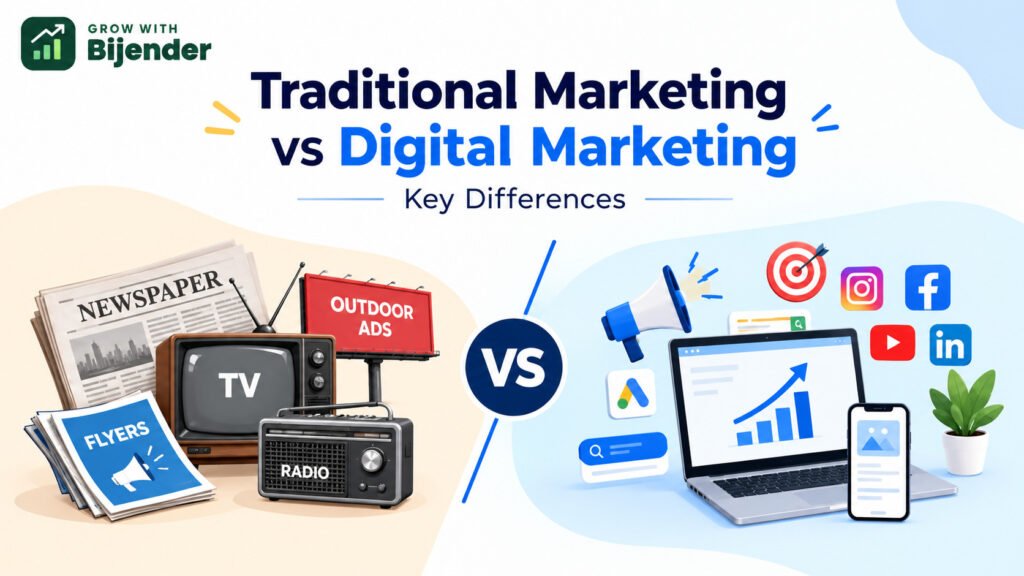
Traditional marketing uses established offline channels such as newspapers, television, radio, billboards, and print advertisements to promote products and services. In contrast, digital marketing leverages online channels, including websites, search engines, email, and social media, to reach audiences, encourage interaction, and measure campaign performance.
Understanding the differences between traditional marketing vs digital marketing, along with their respective advantages and limitations, can help businesses make informed marketing decisions based on their objectives, target audience, and available resources.
What is Traditional Marketing?
Traditional marketing refers to the established strategies and distribution channels that are used to advertise goods and services. It makes use of offline techniques like telemarketing, billboards, direct mail, television and radio advertising, print ads, and these. Traditional marketing uses mass media and tangible items to spread marketing messages in an effort to reach a wide audience.
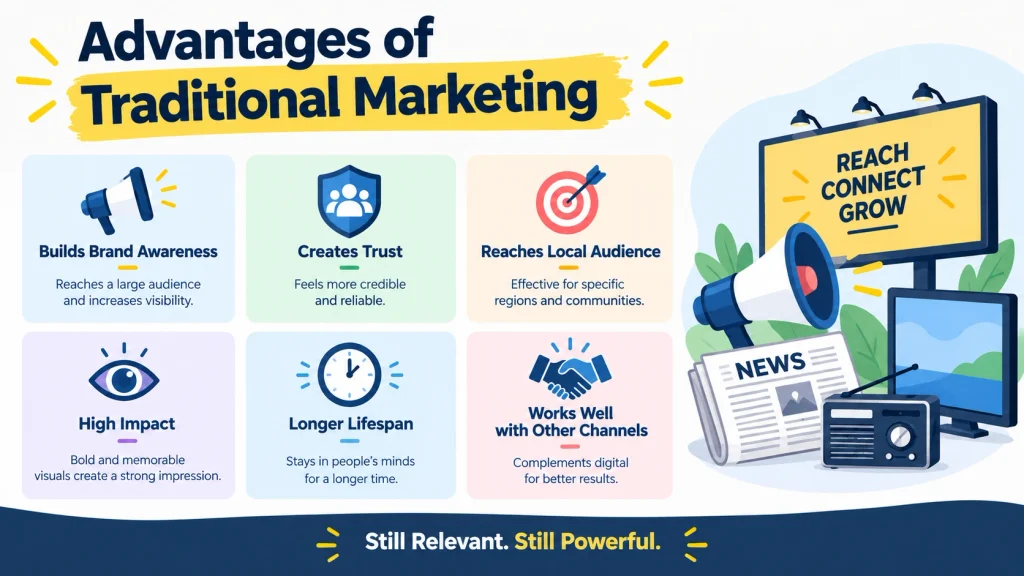
Advantages of Traditional Marketing
- Tangible Presence: Traditional marketing establishes a physical presence through mediums like print adverts, billboards, and direct mail, allowing customers to interact with the marketing materials.
- Local Targeting: Businesses can target a specific local audience through specialised advertising channels like neighbourhood newspapers or regional television networks.
- Familiarity: Many people, especially those who are less conversant with digital technologies, are familiar with traditional marketing techniques because they have been in use for a long time.
What is Digital Marketing?
Digital marketing is the practice of promoting goods and services using digital tools like the Internet, social media, search engines, email, and mobile applications. It includes a range of strategies, including email marketing, search engine optimisation (SEO), social media marketing, content marketing, and online advertising, to connect with and engage a specific audience in the digital sphere.
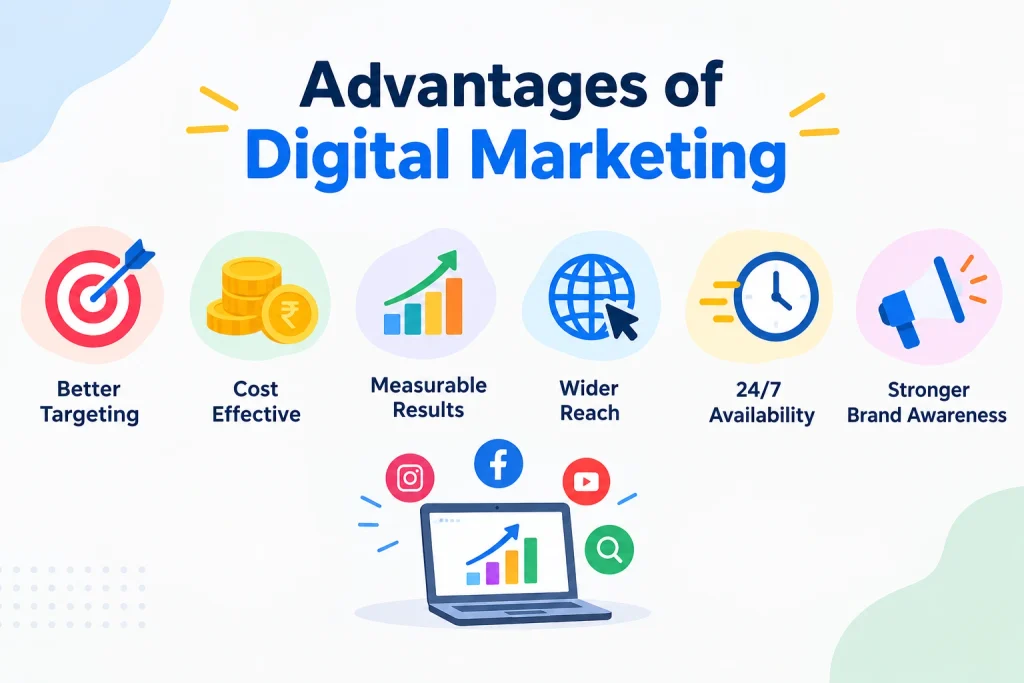
Advantages of Digital Marketing
- Wider Reach: Digital Marketing has the potential to reach a global audience with digital marketing, overcoming geographic limitations and growing its consumer base.
- Targeted Audience: With the use of digital marketing, it is possible to target customers precisely based on their demographics, interests, behaviours, and online activities, ensuring that marketing campaigns are effective.
- Cost-Effective: Digital marketing frequently provides more economical possibilities than traditional marketing does, enabling businesses with limited expenditures to reach a larger audience.
- Measurable Results: Digital Marketing allows to develop data-driven decisions and optimise tactics thanks to the powerful analytics tools provided by digital marketing, which allow them to track and evaluate the efficacy of campaigns.
- Flexibility and Real-Time Adjustments: Based on performance data, digital marketing campaigns may be modified in real-time, enabling firms to make quick adjustments and maximise their marketing efforts.
Traditional Marketing vs Digital Marketing
The primary difference between traditional marketing and digital marketing lies in the channels used to reach audiences, the ability to measure performance, and the ways businesses interact with potential customers.
Here are some of the major differences between traditional marketing and modern marketing:
| Comparison | Traditional Marketing | Digital Marketing |
| Marketing Channels | Television, Newspapers, radio, billboards | Website, emails, search engines and social media |
| Cost | Higher Advertising Costs | More cost-effective and budget-friendly |
| Audience Targeting | Often target broad demographic or geographic groups | Can target specific audiences using interests, behaviours, demographics and search intent |
| Communication | Mostly one-sided communication | Two-sided communication through comments, messages, reviews |
| Brand Trust | High Credibility due to established presence | Trust depends on content quality and platform reliability |
| Performance Measurement | Mostly measured through surveys, circulation figures, sales analysis, etc | Easy to measure through likes, comments, shares, and website traffic |
| Flexibility | Generally requires new production or media bookings | Campaigns can be often updated or adjusted easily |
Conclusion
In today’s scenario, both online marketing and traditional marketing have their importance. Digital marketing offers a wide reach, precise targeting, and measurable results through digital channels, yet traditional marketing encompasses offline tactics like print, radio, and TV, reaching audiences who may not always be active on online platforms. So, It’s worth noting that integrating traditional and digital marketing strategies can often yield the best results, as they complement each other’s strengths.
Frequently Asked Questions
Traditional marketing examples include TV commercials, newspaper ads, radio advertisements, billboards, flyers, brochures, direct mail, and event sponsorships.
Yes, digital marketing is often more cost-effective than traditional marketing because it offers flexible budgets, targeted advertising, and measurable results. However, the overall cost-effectiveness depends on the business’s goals, target audience, and marketing strategy.
Digital marketing is often a good choice for small businesses because it offers flexible budgets, targeted audience reach, and measurable results.
Traditional marketing can involve high costs, limited audience targeting, and difficulties in measuring campaign performance. Digital marketing, on the other hand, faces challenges such as high online competition, changing algorithms, privacy concerns, and the need for continuous monitoring and optimisation.
Digital marketing generally offers better audience targeting and engagement because it allows businesses to reach specific audiences based on demographics, interests, and online behaviour while encouraging interaction through social media, email, and other digital platforms.